Iran Signals Nuclear Policy Stability, Pushes for New Strait of Hormuz Protocol Amid Ongoing War

As the conflict between Iran, United States, and Israel intensifies, Tehran has indicated that its long-standing position on nuclear weapons is unlikely to shift significantly — even as it calls for a new regional framework governing one of the world’s most critical النفط shipping routes.
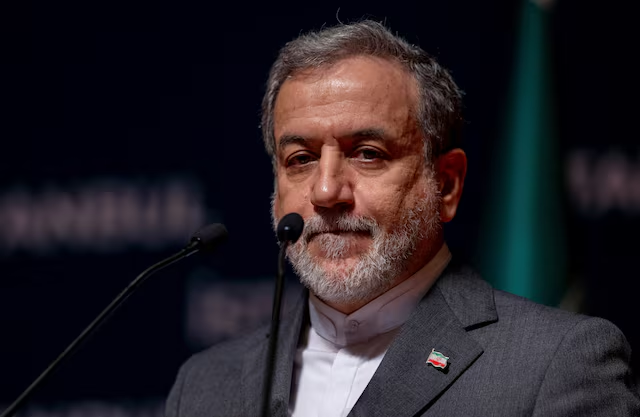
Speaking in remarks carried by Iranian media, Foreign Minister Abbas Araqchi outlined the country’s stance on nuclear policy, regional security, and the future of the Strait of Hormuz.
Iran Maintains Position Against Nuclear Weapons
According to Abbas Araqchi, Iran’s official doctrine opposing the development of nuclear weapons remains largely intact.
This position traces back to a religious ruling issued by former Supreme Leader Ali Khamenei, who declared weapons of mass destruction incompatible with Islamic principles.
Despite ongoing accusations from Western powers, particularly the United States and Israel, Iran continues to insist that its nuclear programme is intended solely for civilian use, including energy production and scientific research.
Uncertainty Under New Leadership
However, questions remain about how this doctrine may evolve under Iran’s new leadership.
Following the reported death of Ali Khamenei earlier in the war, Mojtaba Khamenei has assumed a central role in the country’s political structure.
Araqchi noted that religious rulings, or fatwas, are dependent on the authority issuing them, and he declined to speculate on whether the new leadership might reinterpret Iran’s stance on nuclear weapons.
This ambiguity has raised concerns among international observers about the long-term direction of Iran’s nuclear policy.
Call for New Strait of Hormuz Framework
Beyond nuclear issues, Iran is also pushing for a major shift in regional maritime security arrangements.
The foreign minister proposed that Gulf nations develop a new protocol governing navigation through the Strait of Hormuz once the war ends.
The strait is one of the most strategically important waterways in the world, with roughly 20 percent of global oil and liquefied natural gas supplies passing through it.
Iran’s proposal suggests:
New rules aligned with regional — particularly Iranian — interests
Greater control over maritime access
A redefined security framework led by Gulf states rather than external powers
Oil Route Tensions Escalate
During the conflict, Iran has already taken dramatic steps to assert control over the strait.
Tehran announced restrictions on energy shipments, signaling that it would block oil flows to countries it considers hostile, including the United States and its allies.
Statements from Iranian officials suggest that the strait may not return to its previous operational norms even after the war ends.
This raises the possibility of long-term disruption to global energy markets.
Western Response and Naval Strategy
In response to rising tensions, the United States has explored forming a multinational naval coalition to protect commercial shipping in the region.
However, support from allies has been limited.
Members of NATO have shown reluctance to engage in direct military operations against Iran.
Notably, France has indicated it would only consider participating in a maritime security initiative after a ceasefire and following negotiations with Tehran.
This hesitation reflects broader concerns among European nations about escalation risks.
Conditions for Ending the War
Iran has also outlined conditions under which it would consider ending the conflict.
According to Abbas Araqchi, a ceasefire would require:
A complete halt to hostilities across the region
Guarantees that the conflict will not resume
Compensation for damages sustained during the الحرب
These demands suggest that negotiations, if they occur, could be complex and prolonged.
Strikes Near Civilian Areas Explained
Addressing criticism over Iranian strikes affecting urban areas in Gulf countries, Araqchi argued that such incidents were a consequence of U.S. military positioning.
He claimed that American forces had relocated assets closer to populated zones, increasing the likelihood that nearby civilian infrastructure would be impacted during attacks.
While acknowledging that regional populations have been affected, he placed responsibility on the United States, arguing that the conflict began with U.S.-led actions.
Regional Tensions Deepen
Iranian strikes have already impacted several countries across the Gulf, raising tensions among regional governments.
Civilian concerns, economic disruption, and security fears are increasing as the conflict spreads.
At the same time, Iran’s messaging suggests it is prepared to sustain pressure on U.S. and allied targets across the region.
A Strategic Turning Point
The combination of:
Nuclear policy uncertainty
Control over critical energy routes
Expanding regional military operations
signals a potentially transformative moment in Middle Eastern geopolitics.
Iran’s call for a new Strait of Hormuz protocol indicates a broader ambition to reshape regional security dynamics in the post-war environment.
Global Implications
Any long-term changes to navigation rules in the strait could have far-reaching global consequences, including:
Increased oil price volatility
Disruptions to international trade
Shifts in geopolitical alliances
As the war continues, policymakers around the world are closely watching how Iran’s strategy evolves.
Uncertain Path Ahead
While Iran has signaled continuity in its nuclear doctrine, the broader picture remains uncertain.
Leadership changes, ongoing الحرب, and shifting regional alliances all contribute to an unpredictable environment.
As Iran, United States, and Israel remain locked in confrontation, the future of nuclear policy, energy security, and regional stability hangs in the balance.
You Might Also Like