Starmer Faces Intense PMQs Pressure After Trump Criticism Over Iran War

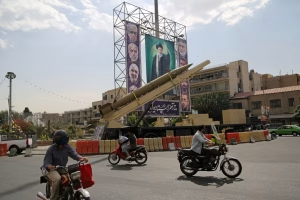
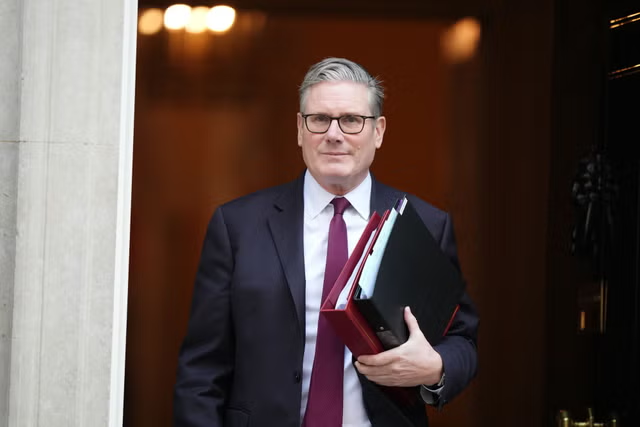
British Prime Minister Keir Starmer is set to face a high-pressure session in Parliament as political tensions rise both domestically and internationally over the ongoing war involving Iran.
The weekly Prime Minister’s Questions (PMQs) in the House of Commons is expected to be dominated by the Middle East conflict, following renewed criticism from Donald Trump.
Trump Criticizes UK Position on Iran War
The latest political friction comes after Donald Trump accused the UK government of failing to fully support U.S. military actions in the conflict.
Trump reportedly described Starmer’s stance as a “big mistake,” suggesting that Britain should take a more aligned position with Washington’s strategy in the region.
The remarks highlight growing divisions among Western allies over how to approach the escalating war.
PMQs Set to Focus on War and Domestic Impact
As lawmakers gather in the House of Commons, Starmer is expected to face tough questions not only on foreign policy but also on how the conflict is affecting the UK domestically.
Key concerns likely to be raised include:
Rising energy prices linked to Middle East instability
National security implications
The UK’s diplomatic positioning between allies
The session could become one of the most significant PMQs debates since the conflict began.
Internal Labour Party Pressure Mounts
Beyond international criticism, Keir Starmer is also facing increasing pressure from within his own political camp.
Angela Rayner, a senior Labour figure, has issued a stark warning that the government must accelerate its efforts to deliver meaningful change.
In recent remarks, she suggested that the party is “running out of time” and cannot afford to appear inactive during a period of economic and social strain.
Immigration and Reform Take Center Stage
One of the central issues highlighted by Angela Rayner is immigration policy.
She described current challenges as requiring urgent reform, framing the issue as a key test of the government’s ability to respond to public concerns.
Her comments signal growing impatience within Labour ranks over the pace of policy implementation.
Andy Burnham Backs Call for Urgency
Support for a faster pace of change has also come from regional leadership.
Andy Burnham, Mayor of Greater Manchester, expressed sympathy with Rayner’s position.
In media interviews, Burnham indicated that many within the party share concerns about the urgency of delivering results, reinforcing the sense of internal pressure facing the prime minister.
Government Acknowledges Frustration
The government has sought to respond to these concerns while maintaining confidence in its agenda.
Nick Thomas-Symonds, a senior minister, acknowledged that there is a shared sense of urgency within the administration.
He emphasized that the government is aware of public expectations and is working to accelerate reforms across key areas.
Balancing Foreign Policy and Domestic Expectations
The situation presents a complex challenge for Keir Starmer, who must balance:
International pressure from allies like the United States
Domestic political expectations within the Labour Party
Public concerns over economic conditions
The Iran war has amplified these pressures by linking foreign policy decisions directly to domestic economic and political outcomes.
Broader Political Implications
Analysts say the convergence of external criticism and internal party tension could have significant implications for Starmer’s leadership.
If the government is seen as:
Weak on international alliances
Slow on domestic reforms
it could face growing political challenges in the months ahead.
A Defining Political Moment
The upcoming PMQs session is shaping up to be a defining moment for Keir Starmer’s leadership.
With criticism coming from both Donald Trump and figures within his own party, the prime minister will need to clearly articulate his strategy on both the Iran conflict and domestic governance.
Uncertain Path Forward
As the war in Iran continues to reshape global politics, its ripple effects are being felt in capitals far beyond the region — including London.
For Starmer, the challenge now is not only managing Britain’s role on the global stage but also maintaining unity and momentum at home.
You Might Also Like