Nearly 8,000 Migrants Died on Global Migration Routes in 2025, but True Toll Likely Much Higher, UN Warns
Brussels — Nearly 8,000 people died or went missing on migration routes worldwide in 2025, according to new figures released by the United Nations, but officials warn the real number is likely significantly higher due to shrinking humanitarian access, reduced monitoring capacity, and severe funding cuts.
The warning came from the International Organization for Migration (IOM), which said deaths occurred across some of the world’s most dangerous migration corridors — including the Mediterranean Sea, the Horn of Africa, the Atlantic route to Europe, and key land crossings in Asia.
Despite a reported decline in recorded deaths compared to 2024, the agency stressed that the drop does not reflect safer conditions — but rather a growing inability to track fatalities as funding for migrant support and data collection continues to dry up.
“A Global Failure We Cannot Accept”
“The continued loss of life on migration routes is a global failure we cannot accept as normal,” said Amy Pope, Director General of the IOM, in a statement issued Thursday.
“These deaths are not inevitable,” Pope added. “When safe pathways are out of reach, people are forced into dangerous journeys and into the hands of smugglers and traffickers. We must act now to expand safe and regular migration routes and ensure protection for people in need, regardless of their status.”
Deaths Down on Paper — But Not in Reality
According to IOM data, 7,667 migrant deaths were recorded globally in 2025, down from nearly 9,200 in 2024. The decline was largely attributed to fewer irregular crossings in the Americas and tougher border enforcement in several regions.
However, the agency cautioned that the apparent reduction is misleading.
Cuts to humanitarian funding — particularly from the United States, historically one of the largest donors — have forced the IOM and partner organisations to scale back or shut down monitoring programs. This has made it harder to document shipwrecks, desert crossings, and deaths in conflict zones.
The Geneva-based agency said many migrant deaths now go unrecorded, especially in remote regions, war-affected areas, and offshore routes where surveillance and rescue operations have been reduced.
Sea Routes Remain the Deadliest
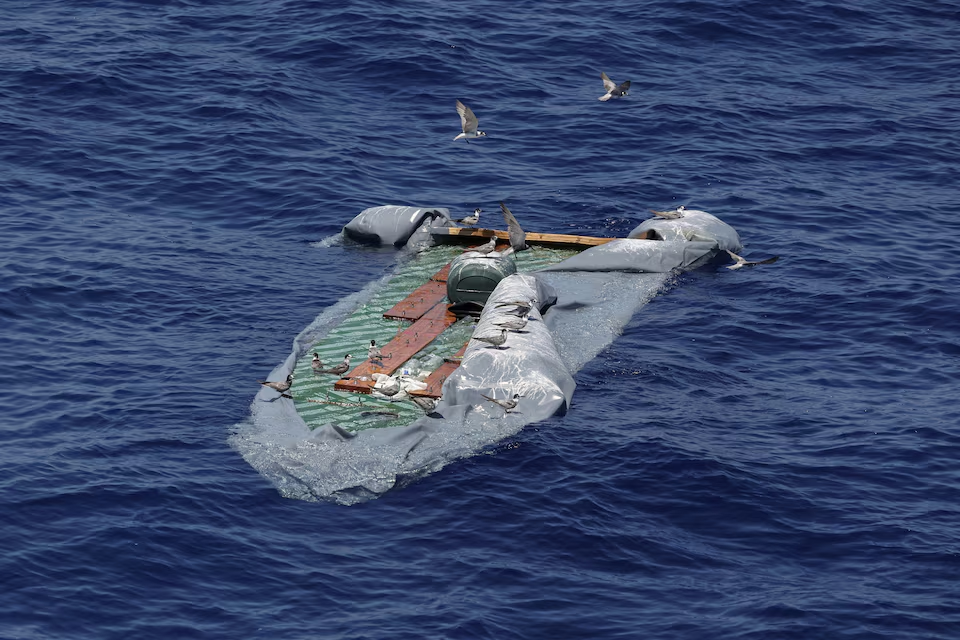
Maritime migration continued to account for the largest share of deaths.
2,108 people died or went missing in the Mediterranean Sea in 2025
1,047 migrants perished on the Atlantic route to Canary Islands
By early 2026, at least 606 deaths had already been recorded in the Mediterranean alone by February 24
Despite decades of warnings, the Mediterranean remains the world’s deadliest migration corridor, driven by overcrowded boats, unseaworthy vessels, and delayed rescue responses.
Sharp Rise in Deaths in Africa and Asia
The IOM recorded 922 deaths along the route crossing the Horn of Africa from Yemen toward Gulf states — a sharp increase from the previous year.
Almost all of those who died were Ethiopians, many killed in three mass shipwrecks involving overcrowded migrant boats.
Meanwhile, nearly 3,000 deaths were recorded in Asia, with Afghans accounting for more than half. Many were fleeing prolonged conflict, economic collapse, and political repression following the Taliban’s return to power.
Shrinking Legal Pathways Fuel Smuggling Networks
The IOM said increasingly restrictive migration policies across Europe, the United States, and other regions are playing a central role in driving migrants toward smugglers.
As governments invest heavily in border enforcement, deterrence infrastructure, and offshore processing agreements, legal and humanitarian migration pathways are shrinking, leaving people with few options other than dangerous irregular journeys.
Human rights groups warn that smugglers are adapting quickly — charging higher fees, using more dangerous routes, and packing migrants into increasingly unsafe transport to evade detection.
Funding Cuts Deepen the Crisis
The agency confirmed it is among several UN and aid organisations affected by major donor funding cuts, which have led to:
Reduced search-and-rescue capacity
Fewer migrant reception centres
Weakened early-warning and tracking systems
Limited access to conflict and transit zones
IOM officials say these reductions not only cost lives but also obscure the true scale of the humanitarian crisis.
A Crisis Extending Into 2026
The trend has continued into 2026, the IOM warned, with early figures suggesting that deaths along major routes remain high despite seasonal fluctuations.
Without renewed international cooperation, expanded legal migration pathways, and restored funding for humanitarian monitoring, the agency cautioned that migrant deaths could rise further — even if fewer are officially counted.
“Invisible Lives, Invisible Deaths”
Humanitarian advocates say the crisis highlights a troubling reality: migrant deaths are becoming normalized and increasingly invisible.
“When people die at sea or in deserts without witnesses, without names, and without records, the political urgency fades,” one aid worker said. “But the suffering does not.”
As conflicts, climate change, and economic instability continue to drive displacement worldwide, the IOM says the choice facing governments is clear: expand safe migration routes — or accept that thousands more will die trying to move in search of safety and dignity.


