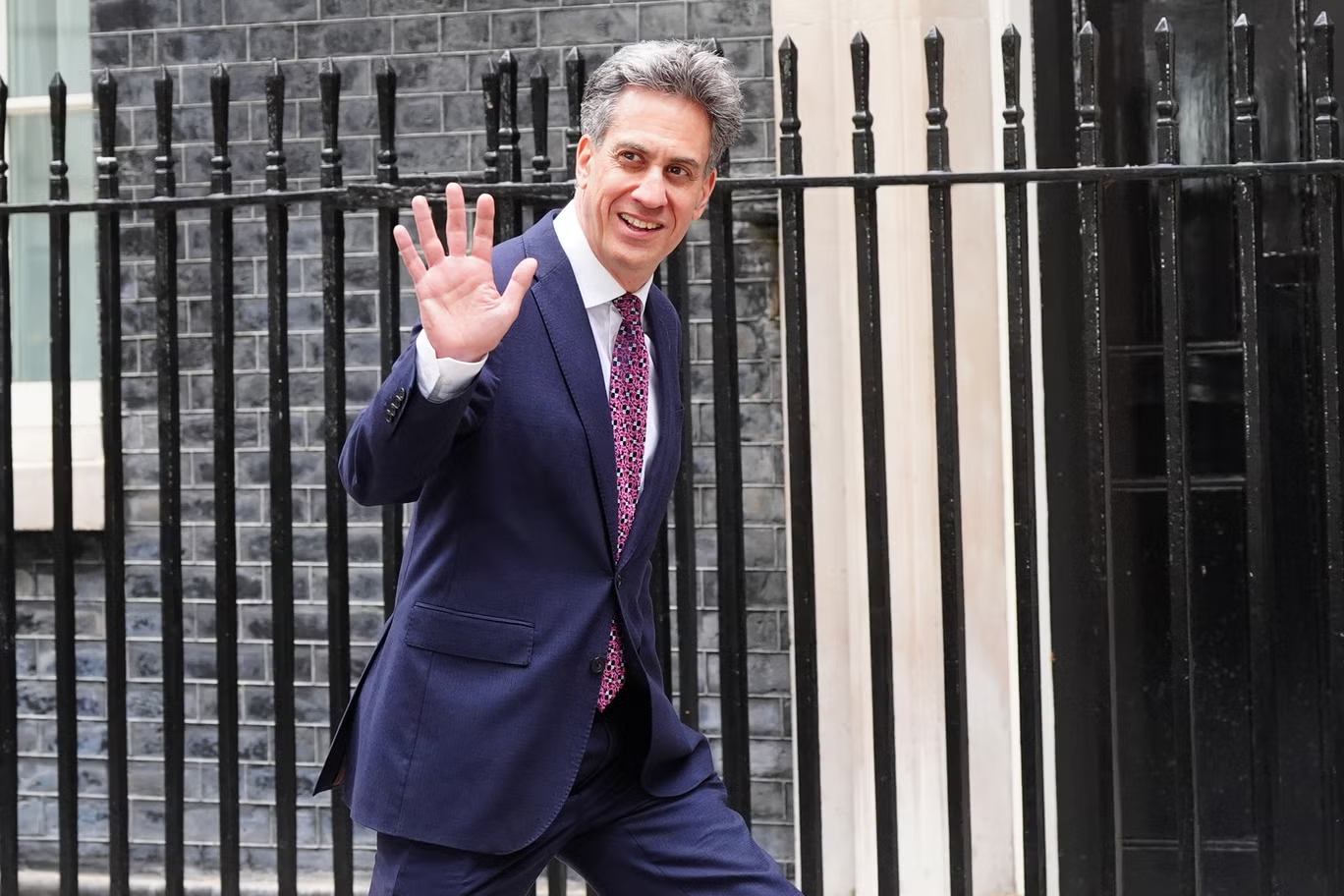
The appointment of Ed Miliband as the United Kingdom’s new Foreign Secretary has reportedly generated concern among allies of U.S. President Donald Trump, with some figures in Washington questioning how the move could affect future UK–US diplomatic relations.
According to reports, individuals close to the Trump administration believe Miliband’s past criticisms of the U.S. president may create challenges as both governments seek to maintain their long-standing strategic partnership.
Miliband, who previously served as Labour Party leader and Energy Secretary, has openly criticised Trump on several occasions over the years. His comments have covered issues including climate policy, democratic values and the former president’s political leadership.
During previous public statements, Miliband described Trump in highly critical terms and urged democratic nations to oppose what he referred to as “Trumpism.” He also participated in demonstrations opposing Trump’s visit to the United Kingdom and criticised the president’s relationship with Russia and his approach to international politics.
His support for ambitious climate policies has also placed him at odds with Trump. The U.S. president has repeatedly criticised Britain’s net-zero agenda, arguing that environmental policies have limited oil and gas development in the North Sea. Miliband, however, has defended the UK’s climate strategy and previously dismissed Trump’s criticism as politically insignificant.
Sources familiar with discussions in Washington claimed that Trump’s team has not forgotten Miliband’s earlier remarks and believes the new foreign secretary will need to rebuild trust if relations between both governments are to remain strong.
Some political consultants and Republican allies reportedly expressed concerns that Miliband’s appointment could complicate diplomatic engagement, arguing that his reputation in conservative circles in Washington is closely associated with strong climate activism and opposition to expanded fossil fuel production.
The concerns reportedly extend beyond climate policy. Some U.S. political figures also continue to reference Miliband’s decision in 2013, while serving as Labour leader, to withdraw support for military intervention against the Syrian government following allegations of chemical weapon attacks. Parliament ultimately rejected military action, a decision that remains controversial among some Western policymakers.
Former British Prime Minister Boris Johnson also criticised the appointment, arguing that decisions made during the Syria debate weakened Western resolve and encouraged Russian aggression in subsequent years. His comments have reignited debate over Britain’s foreign policy decisions during that period.
Despite the criticism, supporters of Miliband believe he is capable of establishing a productive working relationship with the Trump administration.
Former Foreign Office minister Bill Rammell said political disagreements do not necessarily prevent effective diplomacy. He noted that several British politicians who had previously criticised Trump were later able to develop constructive relationships with him after taking office.
Rammell also pointed out that U.S. Vice President JD Vance had once been a critic of Trump before later becoming one of his closest political allies, suggesting that political differences can evolve over time.
Following his appointment, Miliband pledged to promote Britain’s national interests while strengthening international partnerships. He said his priorities include reinforcing cooperation with the European Union and maintaining what he described as Britain’s “strong, enduring and essential alliance” with the United States.
He also reaffirmed his commitment to defending democratic values, freedom and the rule of law while representing the United Kingdom on the global stage.
Although reactions from some Trump allies have been critical, analysts say the true impact of Miliband’s appointment on UK–US relations will become clearer as both governments begin working together on issues including security, trade, climate policy and international diplomacy.