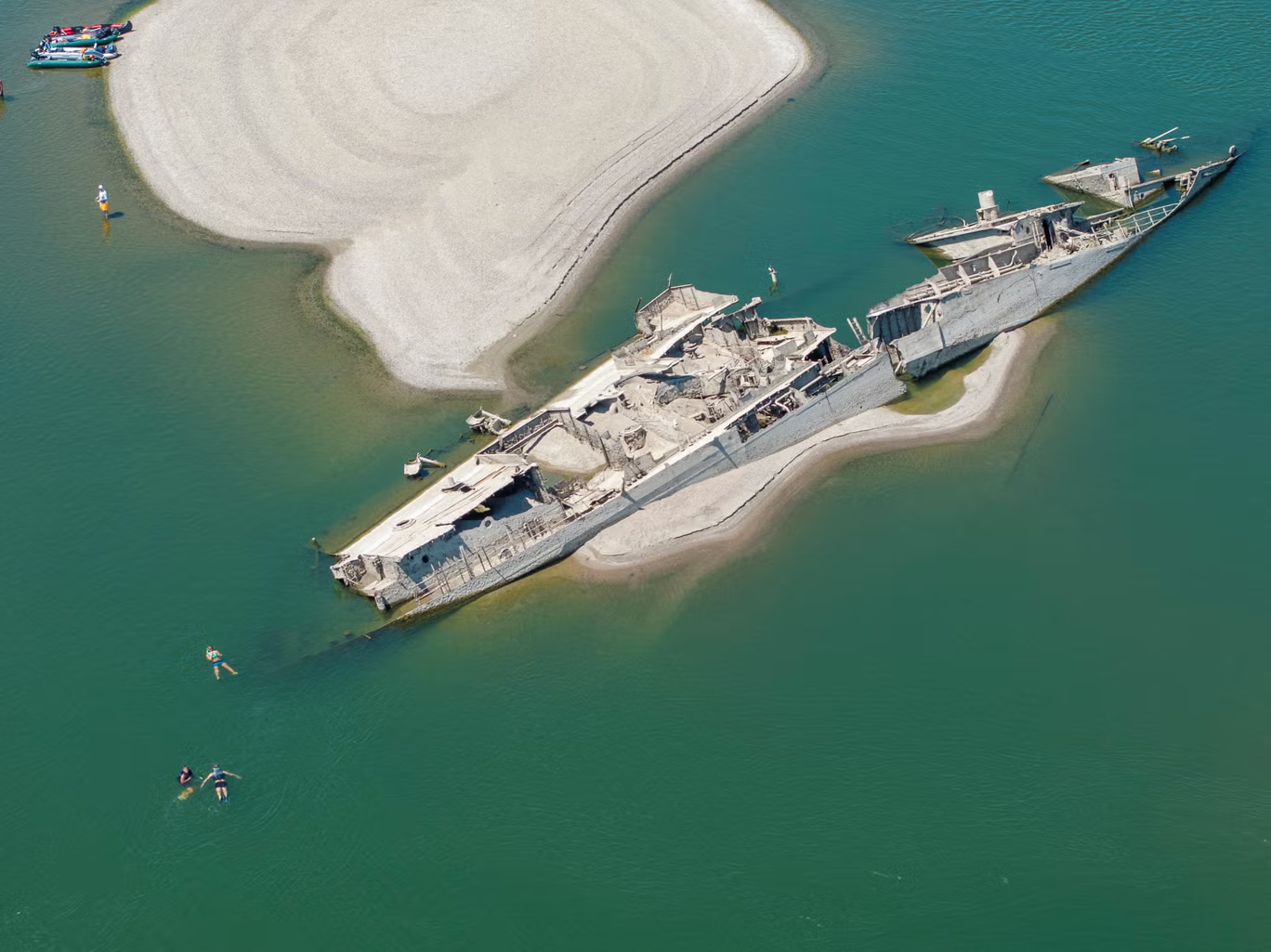

A World War II-era German warship has resurfaced from the bed of the Danube River after prolonged drought and an intense European heatwave pushed water levels to historic lows, exposing long-hidden shipwrecks and raising fresh concerns over energy production, shipping, tourism and water security across several countries.
The discovery was made near Prahovo in eastern Serbia, where one of dozens of sunken German military vessels has emerged as the Danube continues to shrink following weeks of exceptionally hot and dry weather.
The Danube, Europe’s second-longest river, stretches across 10 countries, flowing from southwestern Germany through Central and Eastern Europe before emptying into the Black Sea. The river serves as a major transport corridor and an important source of cooling water for power stations, while also supporting agriculture, tourism and regional commerce.
However, unusually low rainfall and persistent high temperatures have caused the river to fall to some of the lowest levels ever recorded, exposing sandbanks, submerged rocks and decades-old wrecks that have remained hidden beneath the water for generations.
WWII-Era Wrecks Reappear
Among the most striking discoveries is the resurfaced German military vessel dating back to the Second World War.
The ship is believed to be one of approximately 200 vessels lying along sections of the Danube near Prahovo. The wrecks include cargo ships, tugboats, barges and military vessels that were deliberately sunk or destroyed during the final stages of the war.
Residents were seen swimming near the exposed wreck despite the vessel’s wartime history, highlighting the dramatic impact the drought has had on the river’s water levels.
Elsewhere along the Danube, another historic vessel has also reappeared. The wreck of the Fulton, a Hungarian cargo ship built in 1937, has resurfaced near Opatovac, Croatia, after remaining underwater for years.
Historians say such discoveries provide rare glimpses into Europe’s wartime past, although they also present navigation hazards for vessels still using the river.
Heatwave Continues to Grip Europe
The resurfacing of historic shipwrecks comes as another major heatwave spreads across Western Europe, while eastern parts of the continent continue battling severe drought conditions.
Meteorologists say prolonged periods of above-average temperatures have significantly reduced rainfall, accelerating water loss from rivers and reservoirs.
The Danube has become one of the clearest examples of the climate’s impact, with water levels dropping to unprecedented levels in several countries.
In Budapest, Hungary’s capital, the national water authority measured the Danube at just 23 centimetres (9 inches), breaking the previous record low of 33 centimetres (13 inches) set in 2018.
Officials described the measurement as one of the lowest ever observed on the river in the city.
Tourism and River Transport Disrupted
The shrinking river has disrupted both tourism and commercial shipping.
Cruise operators have been forced to alter their schedules after water levels became too shallow for large passenger vessels to dock in central Budapest.
Instead, many cruise ships are now stopping much farther upstream, requiring passengers to travel longer distances before reaching the Hungarian capital.
Commercial shipping has also been heavily affected.
According to transport officials, cargo traffic along sections of the Danube has slowed dramatically, with some freight operators suspending services because vessels can no longer safely navigate the shallow channels.
The disruption threatens supply chains that rely on the river to transport agricultural products, fuel and industrial goods across Central and Eastern Europe.
Energy Production Under Pressure
The drought has also created significant challenges for electricity generation in Hungary and Romania.
Hungary’s Paks Nuclear Power Plant, which produces nearly half of the country’s electricity, relies on water from the Danube to cool its reactors.
Government officials warned that the continued decline in river levels could force the facility to suspend operations for the first time in its 44-year history.
Prime Minister Peter Magyar said the plant’s four Russian-built reactors are currently operating at less than half of their combined generating capacity.
If water levels continue to fall as forecast, officials expect the reactors to shut down completely until river conditions improve sufficiently to allow safe cooling operations.
Authorities noted that while the reactors can be restarted once water levels recover, such improvements are not expected in the coming weeks.
Romania Declares State of Alert
Romania is facing similar challenges.
Prime Minister Ilie Bolojan announced a nationwide state of alert throughout August after declining river levels reduced electricity production.
The government said falling water volumes have affected energy generation, forcing authorities to seek additional electricity imports from neighbouring countries including Ukraine, Greece and Bulgaria.
Romanian nuclear power producer Nuclearelectrica has already shut down one of its reactors as authorities work to manage reduced cooling capacity and maintain grid stability.
Officials warned that prolonged drought could continue placing pressure on the country’s electricity supply if weather conditions fail to improve.
Higher Electricity Demand Expected
The extreme temperatures are also increasing electricity consumption across the region as households and businesses rely more heavily on air-conditioning systems.
In Hungary, authorities estimate evening electricity demand could rise by approximately 20 percent during the heatwave.
The government has urged major industrial consumers to reduce electricity usage during peak periods in an effort to ease pressure on the national grid.
Although Hungary says it can supplement domestic generation through electricity imports, officials acknowledge that reduced local production combined with higher demand presents a significant challenge.
Climate Concerns Intensify
Scientists have repeatedly warned that climate change is increasing the frequency and intensity of extreme weather events across Europe.
Longer droughts, stronger heatwaves and falling river levels are affecting transportation, agriculture, ecosystems and energy infrastructure simultaneously.
The Danube’s current condition illustrates how prolonged dry weather can produce cascading impacts far beyond water shortages, affecting economic activity, tourism, electricity production and international trade.
Experts say if drought conditions continue through the remainder of the summer, governments across Central and Eastern Europe may be forced to introduce additional emergency measures to protect critical infrastructure, manage energy supplies and reduce the economic consequences of one of the continent’s most severe heat events in recent years.
You Might Also Like