Gulf Energy Shock: Qatar Halts LNG as Middle East Conflict Triggers Widespread Oil and Gas Shutdowns
By DGR News | Global Energy & Geopolitics
A Region Built on Energy Faces Its Greatest Disruption in Years
The Middle East, the backbone of the global energy system, is facing its most severe supply shock in years as military escalation between Iran, the United States, and Israel ripples across oil- and gas-producing states. From liquefied natural gas plants in Qatar to oil refineries in Saudi Arabia, offshore gas fields in Israel, and crude exports in Iraqi Kurdistan, energy facilities have been shut, throttled, or placed on emergency standby.
These developments follow days of unprecedented military exchanges that have pushed the region closer to a direct interstate war than at any point in recent history. While the immediate focus remains on security and civilian safety, the economic consequences are already reverberating through global markets.
Oil prices have surged, shipping routes have narrowed, insurers have raised risk premiums, and governments across Asia, Europe, and Africa are scrambling to assess the durability of their energy supply chains.
Why This Crisis Is Different From Past Middle East Shocks
The Middle East has experienced wars, sanctions, proxy conflicts, and periodic attacks on infrastructure for decades. Yet analysts say the current disruption is fundamentally different for three reasons:
Simultaneous shutdowns across multiple producers
Direct threats to LNG supply, not just crude oil
Heightened risk to maritime chokepoints
Unlike previous crises that were geographically contained, the current wave of shutdowns spans the Gulf, the Eastern Mediterranean, and northern Iraq — regions that collectively supply a significant share of the world’s oil, gas, and refined products.
Qatar’s LNG Halt Sends Shockwaves Through Global Gas Markets
LNG: The Backbone of Modern Energy Security
Qatar is not just another energy producer — it is the single most important player in the global liquefied natural gas market. LNG allows gas to be transported across oceans, powering homes, factories, and power plants from Europe to East Asia.
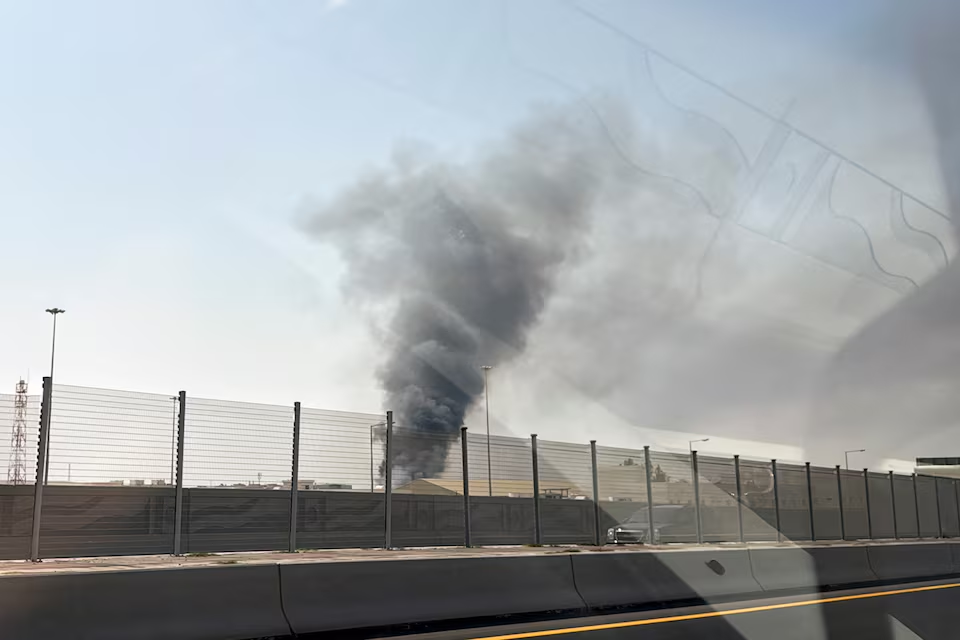
When Qatari authorities confirmed that LNG production had been halted at a major facility operated by QatarEnergy following a drone attack, traders immediately reacted.
The facility was targeted amid Iranian retaliation, and while officials said damage assessments were ongoing, the decision to halt output reflects the extreme sensitivity of LNG infrastructure to security threats.
Why LNG Shutdowns Matter More Than Oil
Oil can often be rerouted, stored, or substituted. LNG, by contrast, operates on tightly synchronized production and shipping schedules. Even brief interruptions can:
Cancel cargoes bound for Europe and Asia
Force utilities to draw down emergency reserves
Trigger price spikes during peak demand seasons
For Europe — still restructuring its gas supply following the collapse of Russian pipeline imports — Qatar has become indispensable. Asian economies such as Japan, South Korea, and China are equally exposed.
Saudi Arabia’s Ras Tanura Refinery: A Strategic Node Goes Offline
Saudi Arabia’s decision to shut the Ras Tanura refinery following a drone strike marks a critical escalation in the economic impact of the conflict.
Operated by Saudi Aramco, Ras Tanura is not only the kingdom’s largest domestic refinery but also part of an integrated export complex on the Gulf coast.
What Makes Ras Tanura So Important?
Processes roughly 550,000 barrels per day
Linked directly to crude export terminals
Supplies refined fuels critical to regional markets
Shutting Ras Tanura sends a clear signal: even the most heavily defended energy infrastructure in the Gulf is no longer considered immune.
Saudi officials described the closure as precautionary, underscoring that risk management — not physical damage — is now driving operational decisions across the region.
Iraqi Kurdistan: Production Stops Without a Single Bomb Falling
In northern Iraq, the impact of the conflict has been indirect but severe. International operators across Iraqi Kurdistan halted oil production en masse, despite reporting no damage to facilities.
Companies including DNO, Gulf Keystone Petroleum, Dana Gas, and HKN Energy suspended output to protect staff and assets.
Why Kurdistan Matters
Exports up to 200,000 barrels per day
Serves as a key non-OPEC supply source
Provides crude to Mediterranean markets via Turkey
The shutdown illustrates how regional insecurity can choke supply even without direct attacks — a worrying precedent for investors and energy planners alike.
Israel’s Offshore Gas Fields Go Dark
Israel’s energy sector, long insulated from regional turmoil by offshore production, has now been drawn directly into the crisis.
The government ordered Chevron to halt production at the Leviathan gas field, one of the largest natural gas discoveries in the Eastern Mediterranean.
Smaller fields operated by Energean were also shut, removing a key source of gas for both domestic consumption and exports.
Regional Ripple Effects
Israel exports gas to Egypt, which relies on those supplies to fuel power plants and LNG export terminals. Reduced flows threaten:
Electricity shortages in Egypt
LNG export disruptions
Higher energy costs across North Africa
Oil Markets React: Prices Surge, Volatility Returns
Crude oil prices surged above $82 per barrel — a sharp jump reflecting fears of prolonged disruption rather than immediate shortages.
Market analysts cite three overlapping concerns:
Physical supply losses
Risk to shipping routes
Psychological panic among traders
Energy markets are notoriously forward-looking. Even the possibility of sustained outages prompts speculative buying, which amplifies price swings.
The Strait of Hormuz: A Chokepoint Under Pressure
At the heart of the crisis lies the Strait of Hormuz, through which roughly 20% of the world’s oil supply flows.
Shipping through the strait has slowed dramatically as insurers reassess risk and vessel operators delay transits. Even temporary disruptions can send shockwaves through global supply chains.
A prolonged closure or sustained harassment of shipping lanes would represent a worst-case scenario for the global economy.
Iran’s Energy Calculus: Producer and Target
Iran occupies a paradoxical position in the crisis. As the third-largest producer in Organization of the Petroleum Exporting Countries, it supplies roughly:
3.3 million barrels per day of crude
1.3 million barrels per day of condensate
At the same time, its export infrastructure — including Kharg Island — has come under scrutiny following reported explosions.
Any sustained hit to Iranian exports would tighten global supply even further, complicating OPEC’s ability to stabilize markets.
LNG, Insurance, and the Cost of War
Beyond production losses, the crisis is reshaping the economics of energy transport:
War-risk insurance premiums are rising sharply
Charter rates for LNG carriers are climbing
Buyers are demanding force majeure clauses
These hidden costs often persist long after fighting subsides, embedding geopolitical risk into long-term energy contracts.
The Human and Political Dimension
Energy infrastructure does not operate in isolation. Shutdowns affect workers, local economies, and national budgets.
For Gulf states, energy revenues underpin social spending, infrastructure projects, and political stability. Even temporary revenue disruptions can have cascading effects.
Governments are now balancing three competing priorities:
Protecting civilians
Preserving energy infrastructure
Avoiding full-scale regional war
What Comes Next: Scenarios and Risks
Scenario 1: Rapid De-Escalation
Facilities gradually reopen, prices stabilize, and markets absorb the shock.
Scenario 2: Prolonged Low-Intensity Conflict
Intermittent shutdowns, high insurance costs, and sustained price volatility.
Scenario 3: Regional War
Severe supply losses, triple-digit oil prices, global recession risks.
At present, markets are pricing in Scenario 2 — a fragile equilibrium marked by uncertainty.
A Turning Point for Global Energy Security
The current crisis underscores a sobering reality: despite decades of diversification, the global energy system remains deeply vulnerable to Middle Eastern instability.
Renewables, strategic reserves, and alternative suppliers have softened the blow — but they have not eliminated risk.
As one energy strategist told DGR News:
“This isn’t just another Middle East flare-up. It’s a stress test of the entire global energy order.”
Conclusion: A Region Holds the World’s Breath
As Qatar’s LNG plants sit idle, Saudi refineries remain shuttered, Kurdish oil flows pause, and Israeli gas fields go dark, the world is witnessing how quickly geopolitical conflict can disrupt the arteries of the global economy.
Whether this crisis becomes a brief shock or a defining energy event will depend not only on military decisions — but on diplomacy, restraint, and the fragile balance of power in one of the world’s most volatile regions.
For now, energy markets — and billions of consumers worldwide — are watching the Gulf with unease.
That’s so painful