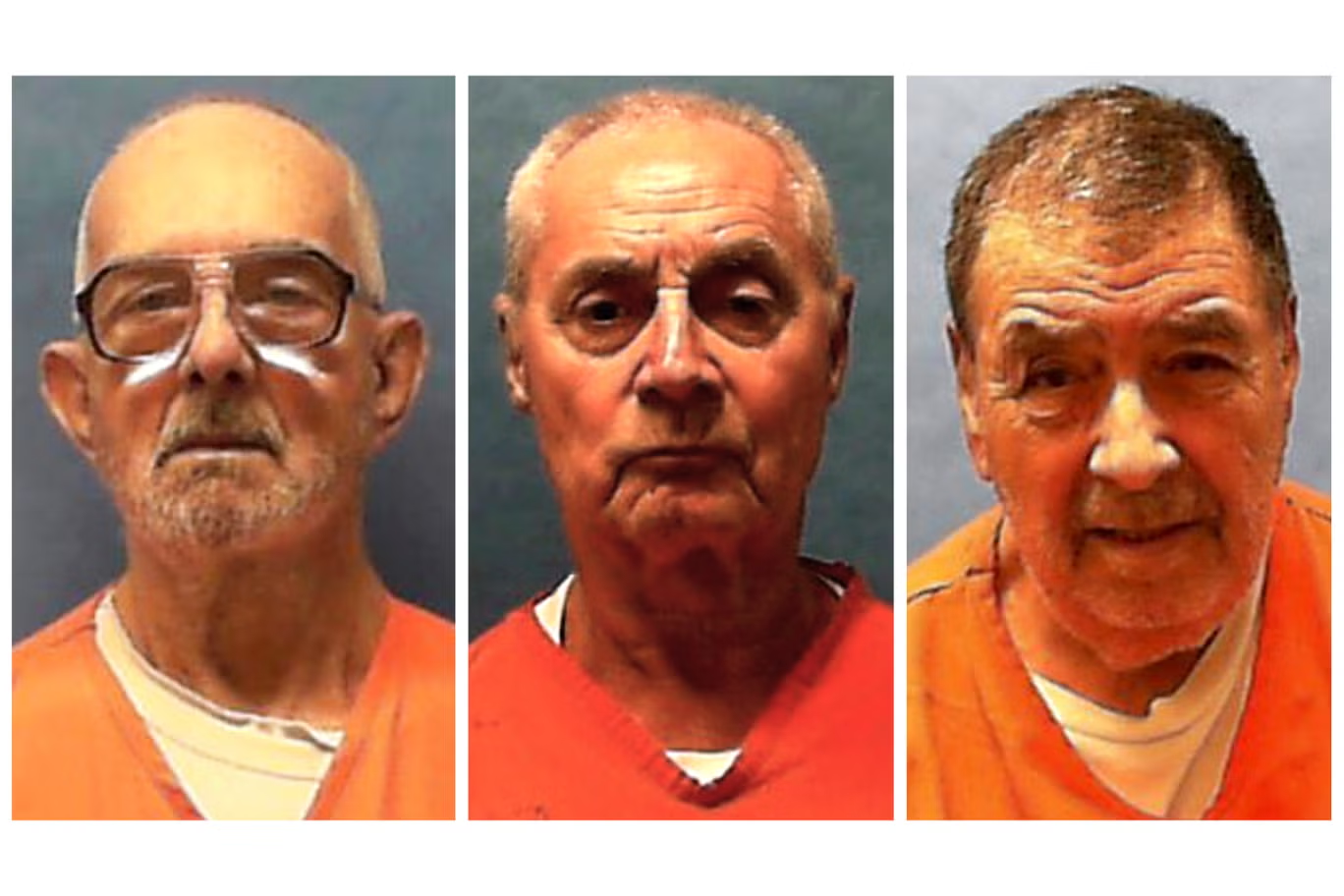
Florida is set to carry out the executions of two of its oldest death row inmates this month, a development that has renewed debate over capital punishment as the nation’s death row population continues to age.

The planned executions come weeks after the state executed a 74-year-old inmate, the oldest person put to death in Florida’s modern history. The cases have intensified discussions over whether advanced age should influence the implementation of death sentences or whether justice should proceed regardless of how much time has passed.
Elderly Inmates Face Execution
Among those scheduled for execution is Dennis Sochor, 74, who was convicted of the 1982 murder of 18-year-old Patricia Gifford. His execution is expected to take place this week.
Another inmate, Dominick Anthony Occhicone, 80, is scheduled to be executed later this month for the 1986 killings of his former girlfriend’s parents. If the sentence is carried out, he would become only the second known person aged 80 or older to be executed in the United States. The oldest known execution remains that of Walter Moody Jr., who was executed in Alabama at the age of 83 in 2018.
Florida currently has four inmates on death row who are older than 80.
Families of Victims Welcome the Decision
For many relatives of victims, the inmates’ age does not diminish the need for accountability.
Marilyn Gifford, whose sister was murdered by Sochor, said her family had waited decades for justice and viewed the scheduled execution as long overdue.
She said she was grateful the sentence would finally be carried out during her lifetime, adding that she wished her late mother had lived to witness it.
Another family friend of the victim, Frank Frandel, dismissed arguments that Sochor’s age should influence the outcome, noting that people can live well into their nineties and beyond.
Religious Leaders Oppose Executions of Elderly Prisoners
Opponents of the death penalty argue that executing elderly inmates raises humanitarian concerns, particularly when many suffer from serious medical conditions after spending decades behind bars.
The Rev. Dustin Feddon, a Catholic priest who has worked with Florida death row inmates for years, questioned the morality of executing prisoners who are frail and approaching the end of their natural lives.
He argued that carrying out death sentences under such circumstances could be viewed as unnecessarily harsh, reflecting the Catholic Church’s longstanding opposition to capital punishment.
Long Appeals Contribute to Aging Death Row Population
Legal experts say the growing number of elderly death row inmates is largely the result of the lengthy appeals process required in capital punishment cases.
Mandatory reviews and multiple layers of appeals are designed to protect constitutional rights and reduce the risk of wrongful executions. However, they also mean many inmates spend decades awaiting the final outcome of their cases.
According to the Death Penalty Information Center, the average age of executed inmates in the United States has steadily increased over the past several decades, rising from people in their thirties to those in their fifties and older.
Health Issues Do Not Automatically Halt Executions
Occhicone’s lawyers have argued that he suffers from several age-related medical conditions, including kidney and prostate problems, and requires assistance with daily activities.
However, legal experts note that U.S. law does not exempt prisoners from execution solely because they are elderly.
Challenges to executions generally succeed only if an inmate is found mentally incompetent to understand the punishment or if a medical condition would make the execution method unconstitutional by causing excessive suffering.
Previous cases in states including Utah, Alabama and Idaho have resulted in delayed or cancelled executions because of dementia or severe illness, although those decisions were based on specific legal and medical circumstances rather than age alone.
Florida’s Execution Policy
Florida remains one of the country’s most active death penalty states.
Unlike many states where courts largely determine execution schedules, Florida law gives the governor significant authority to sign death warrants for inmates who have exhausted their appeals.
Roughly half of the state’s more than 240 death row inmates are eligible for execution warrants after completing the appeals process.
Governor Ron DeSantis has overseen a sharp increase in executions in recent years. State officials have argued that carrying out long-delayed sentences provides justice for victims’ families, many of whom have waited decades since the crimes were committed.
The latest executions highlight the continuing national debate between those who believe justice should be carried out regardless of an inmate’s age and those who argue that executing elderly prisoners raises serious moral and humanitarian concerns.
You Might Also Like