
A former Russian deputy foreign minister and adviser to President Vladimir Putin has warned that British facilities producing military equipment for Ukraine could become targets of attacks carried out by unidentified actors, escalating concerns over the consequences of London’s expanding defence cooperation with Kyiv.
Andrei Fedorov said he could not completely rule out the possibility of what he described as “semi-military” actions against British interests as the United Kingdom deepens its support for Ukraine.
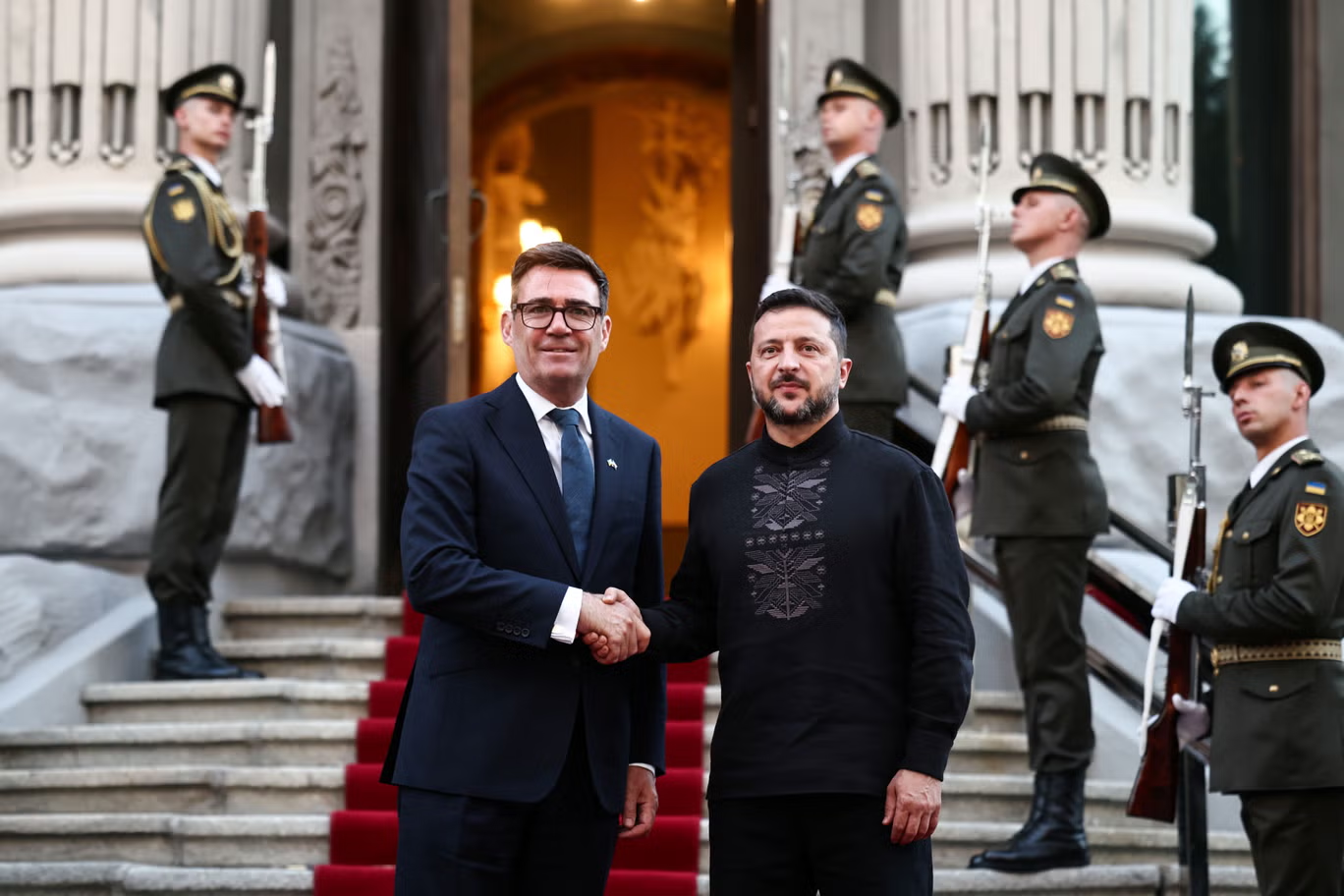
His comments came as UK Prime Minister Andy Burnham visited Kyiv and reaffirmed Britain’s commitment to helping Ukraine withstand Russia’s ongoing attacks.
Russian adviser raises threat of retaliation
Speaking to BBC Newsnight, Fedorov suggested that Russia could respond to Britain’s support for Ukraine through a range of measures.
He said possible responses could include cyberattacks, political actions or other operations conducted indirectly rather than openly attributed to the Russian state.
Asked what he meant by a possible “semi-military” response, Fedorov pointed specifically to companies involved in manufacturing drones and other military equipment for Ukraine.
He suggested that factories producing such equipment could potentially come under attack, while stressing that any such action might be carried out by unidentified groups rather than officially acknowledged Russian forces.
The comments represent a serious warning because Britain has become one of Ukraine’s most prominent military supporters since Russia launched its full-scale invasion.
UK expands military cooperation with Kyiv
Fedorov’s remarks followed Britain’s decision to allow the release of classified information relating to British-made components used in the SCALP long-range missile.
The weapon, jointly developed by Britain and France and known in Britain as Storm Shadow, has been supplied to Ukraine and has been used by Ukrainian forces against targets during the war.
The decision to share information about British components has drawn criticism from Moscow.
Russian presidential spokesman Dmitry Peskov condemned the move, saying it would further intensify the conflict.
The Kremlin has repeatedly warned Western countries that providing increasingly sophisticated weapons to Ukraine risks widening their involvement in the war.
Burnham reaffirms Britain’s support
During his visit to Kyiv, Burnham met Ukrainian President Volodymyr Zelensky and assured him that Britain would maintain its support for Ukraine.
The British leader said there would be no change in London’s position and stressed the need for Ukraine’s allies to provide additional military assistance as Russian attacks continue.
Burnham also participated in a meeting of the Coalition of the Willing, a group of countries coordinating support for Ukraine.
He called on participating nations to make greater use of their available stocks of interceptor missiles, particularly as Kyiv faces continued attacks involving drones and ballistic missiles.
The Ukrainian government has repeatedly appealed for additional air-defence systems, including US-made Patriot missiles, as its existing stocks come under increasing pressure.
Ukraine faces growing air-defence challenge
Ukraine’s need for additional interceptor missiles has become increasingly urgent as Russia continues to launch large-scale attacks against Ukrainian cities and infrastructure.
Kyiv has warned that shortages of air-defence ammunition could make it increasingly difficult to protect population centres and critical facilities.
The situation has also been complicated by competing demands for Patriot systems and other defensive weapons elsewhere, including the Middle East.
British officials said the coalition meeting focused on finding ways to increase support for Ukraine ahead of the winter period, when attacks on energy infrastructure could have particularly severe consequences.
A statement from Downing Street said the discussions with Zelensky were productive and emphasised the need for the international community to strengthen its assistance to Ukraine.
Ukraine offers Britain battlefield data
The visit also produced a new defence cooperation agreement designed to give Britain greater access to Ukraine’s experience from the battlefield.
Under the arrangement, the UK’s Ministry of Defence and selected British companies will gain access to Ukraine’s “Avengers” artificial intelligence database.
The initiative is intended to allow British defence and technology specialists to study data generated through Ukraine’s experience of modern warfare.
Officials believe the information could help Britain develop artificial-intelligence systems for defence and wider national security applications.
Ukraine has effectively become a testing ground for emerging military technologies, particularly in areas involving drones, electronic warfare, surveillance and artificial intelligence.
For Britain, gaining access to that experience could help improve its own defence capabilities while strengthening cooperation between the two countries.
A visit combining diplomacy and symbolism
Burnham’s trip also included lighter moments away from the formal diplomatic meetings.
While in Kyiv, the Prime Minister was handed a guitar by a Ukrainian soldier and played a few chords from The Smiths’ “Rusholme Ruffians”, explaining that the song came from a Manchester band.
He declined to sing but said music could help raise morale among people living through the conflict. Ukrainian soldiers also performed an Oasis song for him.
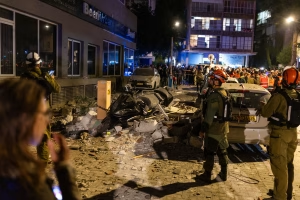
Burnham later visited a shopping centre damaged during a Russian attack and interacted with local residents, including taking photographs with some of those he met.
Warning comes amid rising tensions
The remarks by Fedorov have added another layer to the increasingly tense relationship between Russia and Britain.
London’s continued supply of weapons, intelligence and other assistance to Ukraine has made the UK a frequent target of Russian criticism.
However, Fedorov’s suggestion that British defence facilities could potentially face attacks from unidentified actors raises concerns about the possibility of covert retaliation, particularly against companies involved in supplying Ukraine.
There has been no indication from the British government that an attack on UK factories is imminent, and Fedorov’s comments were framed as a possibility rather than a declaration of planned Russian action.
For now, Britain says its support for Ukraine remains unchanged, while Kyiv continues to seek additional military assistance as the war enters another difficult phase.
You Might Also Like